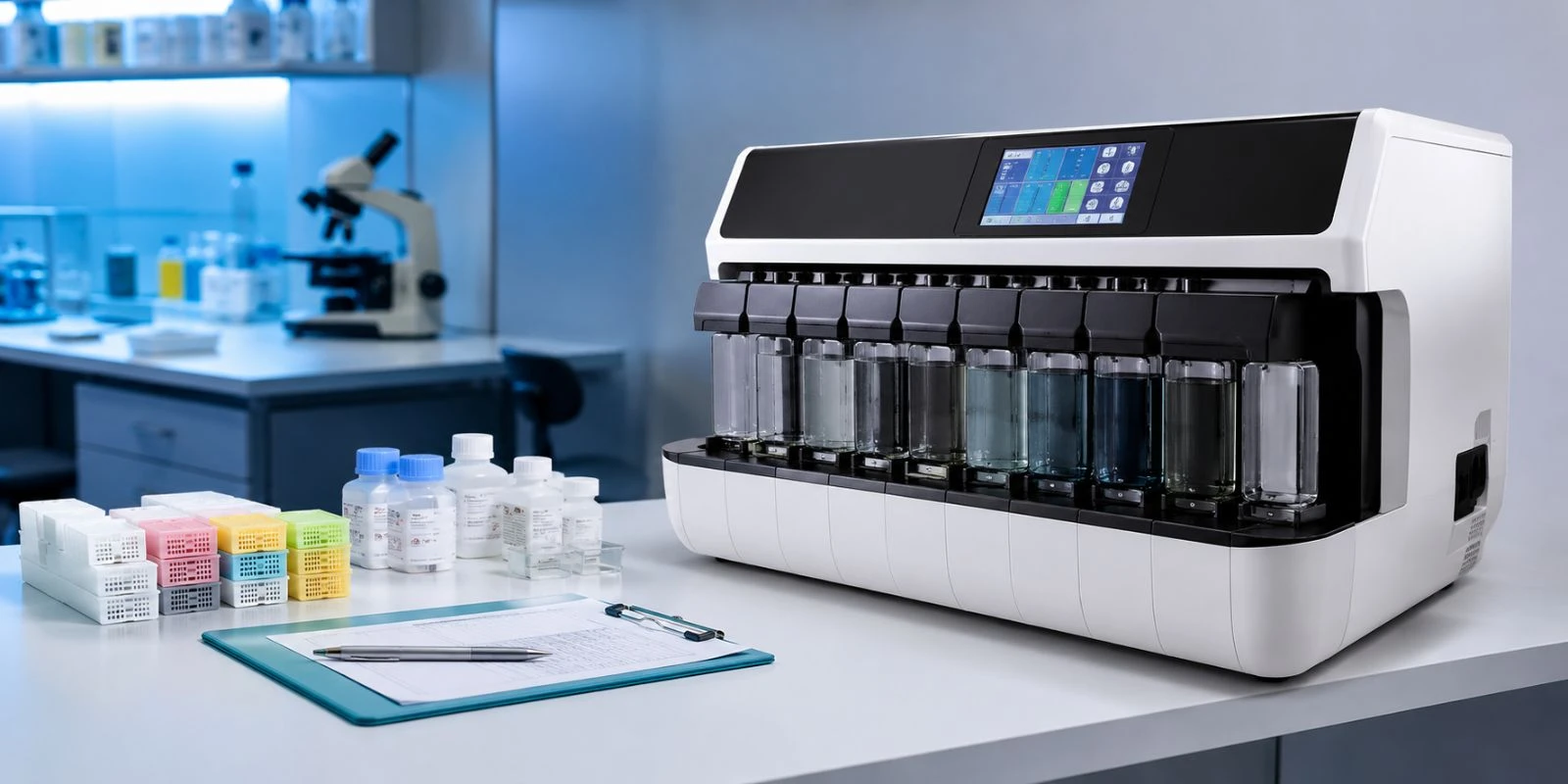
Selecting the right tissue processor is one of the most critical procurement decisions for any histopathology laboratory. Tissue processors automate the fixation, dehydration, clearing, and paraffin infiltration of tissue specimens, directly impacting slide quality and diagnostic turnaround times. Investing in an automated, reliable tissue processor minimizes manual handling errors and ensures uniform sample quality, making it a vital asset for routine pathology, research labs, and hospital diagnostic centers.
When evaluating tissue processors, facility capacity and daily sample workload should guide your choice between carousel-type and enclosed vacuum systems. Carousel processors offer an economical, user-friendly solution ideal for low-to-medium sample volumes, whereas enclosed vacuum units provide enhanced safety, faster infiltration, and superior handling for high-volume diagnostic labs. Matching equipment throughput with your laboratory's daily sample load prevents operational bottlenecks, optimizing workflow efficiency and reagent consumption.
Safety features and automated fail-safes are essential parameters to inspect before purchasing a tissue processor. Modern units feature delay-start timers, emergency power backup integration, reagent agitation mechanisms, and automated basket movement to protect valuable tissue samples during power outages or mechanical failures. Choosing processors built with safety interlocks and battery backup options safeguards critical specimens against drying out, preserving irreplaceable biopsy samples.
Reagent management, sealing efficiency, and fume control are critical factors for maintainability and environmental safety. Quality tissue processors incorporate airtight seal covers and built-in activated carbon filters or external exhaust connectors to eliminate harmful chemical vapors like formalin and xylene. Selecting equipment with integrated fume extraction systems maintains a safe, odor-free laboratory environment, complying with occupational health and safety standards.
Finally, total cost of ownership—including warranty coverage, maintenance service contracts, and vendor reputation—must be evaluated alongside initial purchase price. Sourcing directly from reputable manufacturers ensures access to authentic replacement parts, routine calibration, and prompt technical support. Partnering with trusted manufacturers guarantees long-term equipment reliability, low operational downtime, and optimal diagnostic accuracy for your tissue processing needs.